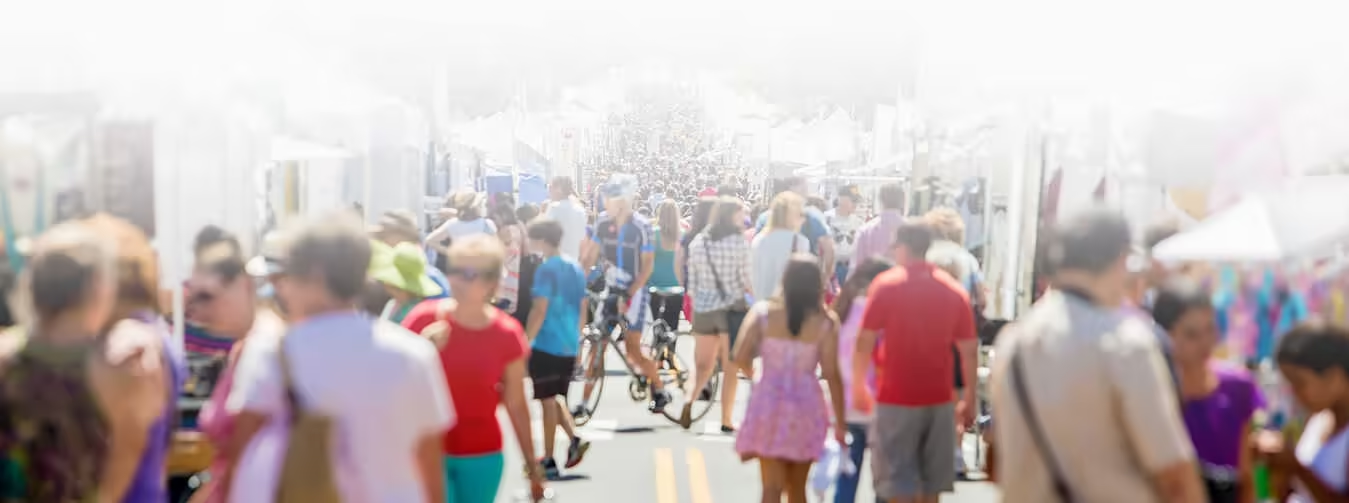


Road events test craft pros. Space runs short, weather shifts fast, and load-in times feel tight. You want speed, order, and calm. In the festival industry, small choices decide profit and stress. This guide hands you clear steps to act today. You will pack less, sell more, and move with purpose. Above all, you will avoid guesswork. Here, you will learn the packing essentials every traveling artisan needs and a method that fits real life.
What Are The Packing Essentials Every Traveling Artisan Needs?
Your kit works as a mobile studio. Each tool earns a spot, or it stays home. Build a core set that solves common failures on site. Then add craft-specific gear with intent. Keep the weight low and the payoff high. Also, keep tools in one roll so parts never stray. Finally, label every pouch with a bold tag.
Must have tools include a multitool, gaffer tape, a sharp blade with spare edges, zip ties, a tiny sewing set, quick set glue, a steel rule, and two microfiber cloths. However, you also need nitrile gloves for dyes or resin, plus a small flashlight for dusk checks. Thus, your core set covers most booth mishaps in minutes.
Bins, Bags, and Cases
Next, design a simple bin plan. Match case size to booth size and car space. Clear lids allow fast scans before you lock the car. Hard cases save fragile stock. Soft totes flex around odd shapes. Yet both fail if you ignore the weight per hand. Therefore, cap each bin at a safe lift for one person.
Use one code per bin so you can find items at once. Color bands on pouches aid order. So a red band marks power, a blue band marks display, and a gray band marks care. Then post a map on the inside lid. After that, stage bins in load order near the door. The first out holds the base, and the last out holds the polish.
- Bin A: base hardware, tarp, stakes, mallet
- Bin B: lights, cords, power strip, tape
- Bin C: POS, receipt pads, cash apron, pens
- Bin D: bags, wrap, boxes, labels
- Bin E: first aid, wipes, gloves, snacks
Flat-Pack Displays That Look Premium
Now aim for height, sight lines, and speed. Fold flat grids pair with S hooks for strong, light racks. Telescopic poles raise banners above heads. Slim risers add depth to tables. However, every piece must lock tightly against the wind. So test with a shake at home. Then track setup time and cut steps that waste effort.
Keep one small tool roll for display work only. A hex key set, a stub driver, spare bolts, and felt pads will solve most issues. Also, add cord covers to prevent trips. For a quick polish, wipe glass and metal at the end. Last, note that you can set up a professional-looking booth on a budget with smart props, clear price tags, and a tight color rule. Also, add two clamp lights that fit in one pouch. Then test the light at dusk in your yard. Next, clip a price card to each shelf lip for clear cues. However, avoid tall signs that sway. Instead, brace poles with guy lines. This way, you protect sight lines and keep a calm scene at shows now.
Power, Light, and Charge
Strong light sells detail. LED clamp lamps focus eyes on craft lines and color. Also, aim the light across the table, not down. Shadows stay soft and glare stays low. Then test placement at dusk to confirm tone. So you guide sight and lift value—next, angle one lamp toward the texture for depth.
Power plans save shows. A high-output power bank keeps phones, readers, and lamps alive. Also, pack a surge bar with a long cord. One outlet can serve the full booth. Next, add cord covers so feet stay safe. So, test run the full setup at home.
Charge rules help a team. Set a timer for each device. Also, track the order with a small card. This way, no tool dies mid-sale. Next, rotate banks from floor to table. Also, label each cord for clarity. So your POS stays on, and your line moves.
Pack and POS That Move the Line
Fast, organized packing makes every transaction smoother and keeps customers satisfied. Flat-fold boxes store compactly and pop open in seconds when needed. Slim protective sleeves safeguard prints or charms without adding bulk. Pre-cut tissue sheets, stacked in advance, save time during handoff. These small adjustments reduce stress and give you better control over both speed and presentation.
- Flat-fold boxes that store compactly and open in seconds
- Protective sleeves sized for prints and charms
- Tissue sheets cut and stacked for rapid use
- A tap-to-pay reader for quick transactions
- A cash apron with floats sorted by note
- A backup hotspot for unstable event Wi-Fi
- A simple receipt solution that fits one pouch
In addition, a point-of-sale system should never slow down your booth. A card reader keeps the line moving, while a cash apron lets you give change quickly. A hotspot protects you from missed sales if Wi-Fi cuts out.
In the end, keeping everything clear, compact, and reliable while packing creates a smoother flow. In truth, sellers often look for ways to save money on this, and the easiest path is using packing hacks that cut costs—like sourcing free or cheap supplies, packing strategically, or reusing items you already have for padding.
Comfort, Weather, and Safety
Long events test both body and focus, so comfort needs to be part of your packing plan. Anti-fatigue mats ease pressure on joints, while a supportive stool keeps posture steady without losing eye contact with visitors. A wide-brim hat and a light neck buff protect against the sun, giving you energy through the late hours.
Cold air or sudden rain calls for layered solutions. A compact jacket fits any bin, hand warmers slip into a pocket, and a rain shell shields your booth when storms roll in. Even dry socks sealed in a pouch can make the difference between distraction and calm during a busy day.
Tiny Gains, Big Wins
Trust grows through details. A clean cloth for prints, neat price tags, and shelves aligned to level all tell buyers that your work matters. Small touches set a tone of care and raise confidence before the first word is spoken.
Crowd flow requires equal attention. If visitors pause too long at the aisle edge, it signals a problem. Adjust the layout, shift a display, or angle a light to guide people forward. Those tiny details that make a huge difference at local fairs often cost nothing but yield more sales and smoother days.
These Packing Essentials Every Traveling Artisan Needs Will Make Your Life Easier
Order creates calm, and calm drives sales. The packing essentials every traveling artisan needs form a repeatable system that reduces stress and increases speed. Keep photos of your best layout so that you can recreate it in minutes at each venue. Time every step, trim wasted effort, and refine until the process feels second nature. With each improvement, you serve customers faster, protect your craft, and give yourself room to succeed.
Photo by Craig Adderley via Pexels